
The highly versatile autonomous delivery robot reduces the workload of medical professionals, as well as achieving contactless transportation.
Injection drug cart autonomous delivery robot MELCADY
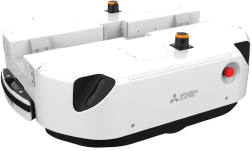
The robot can automatically pick up and autonomously transport injection drug carts as the loaded carts are released from an automatic injection drug dispensing system (ampoule picker).
- Product introduction video: MELDY autonomous delivery robot for hospitals
- Product introduction video: MELCADY injection drug cart autonomous delivery robot


-
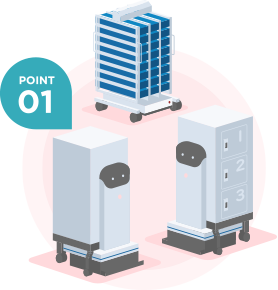
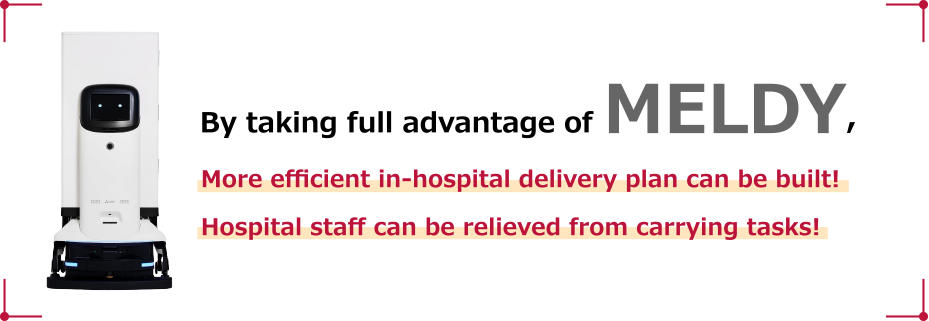
Ability to transport a wide variety of objectsCapable of carrying drugs, test samples, and blood products, as well as entire injection drug carts.
-
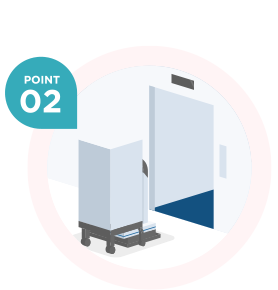
Contactless delivery achieved with autonomous driving technologies
It can get on and off elevators, and move through automated doors.
-
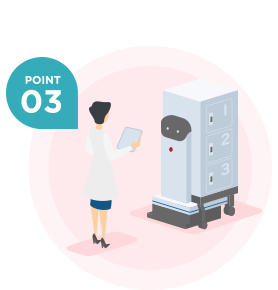
Swift delivery with simple operationSwift delivery is just a touch of button away, whenever needed.


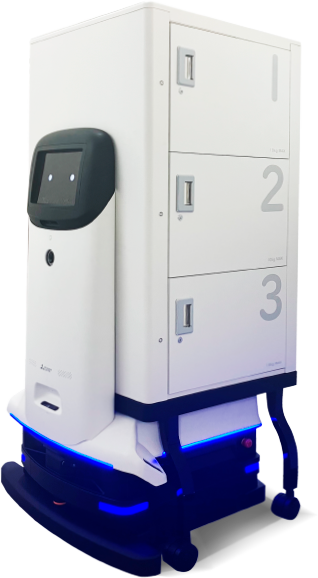
MELDY
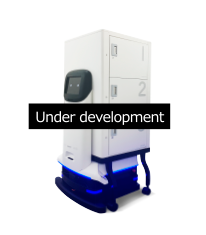
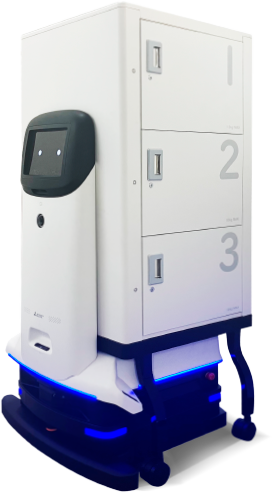
Integrated locker type
Integrated locker type
ID card compatible
● Unlock lockers with ID cards
● Improved security strengthens drug management practice
● Send-and-receive logs and history can be managed for each locker
Simple operation using touch screen
Maximum load: 30kg
MELCADY
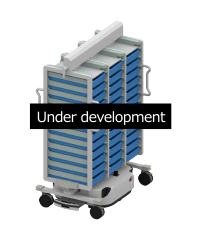
Capable of safely and autonomously transporting conventional carts* as they are.
* Yuyama rotation cart (4-divided-tray)Common across all lineups
- Travels with in-hospital map (no need for route guides)
- Recognizes surrounding situations, using LiDAR and cameras to automatically avoid humans and obstacles
- Safely and autonomously travels, by alerting its presence through tunes, voices and writing.
- Linked with elevators and room entry/exist management systems, capable of autonomously travelling inside the building both vertically and horizontally.
- Notifies its arrival with alarm on the operating tablet
- Can be automatically charged
- Can be group controlled, using control systems
- Operational status can be monitored
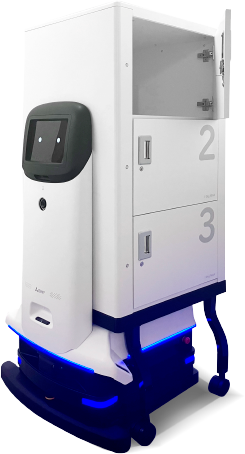

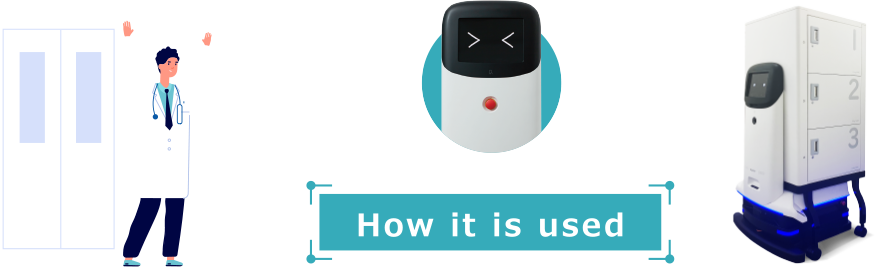

In the case of the integrated locker type
1.Medication room
-
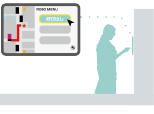
Using a tablet
“Call robot.” -
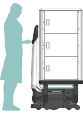
The robot arrives at the hospital pharmacy. The staff holds employee ID card over the robot.
-
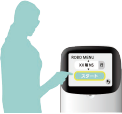
Store drugs in the lockers.
Set the delivery destination, using the robot’s face screen.
2.During the travel
-
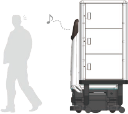
The robot alerts its presence to people nearby, by playing a specific tune for travelling.
It alerts the changes of directions at corners, etc., with voice messages.
Traffic rules can be programmed, too.
3.Staff station
-
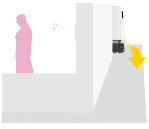
A tablet placed at the staff station alerts the robot’s arrival in advance.
Notifications are sent regularly until the completion of receipt. -
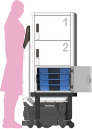
- The robot arrives at the staff station.
- The staff holds employee ID card over the robot.
- The locker that contains an item to be received automatically unlocks.
- Pick out the item and shut the door.
- Press a button to start the robot’s travel on its face screen.
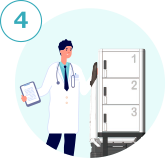
4.Medication room
-
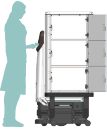
- The robot returns to the hospital pharmacy.
- As the staff holds employee ID card over the robot, all locker doors automatically unlock.
- Upon the visual confirmation of the receipt of all delivery items, the staff shuts all doors.
- Presses the button to start the robot’s travel.
- The robot returns to its waiting place. Its battery automatically starts charging.
- Waits until the next delivery scheduled starts.


We understand and make visible how in-hospital deliveries are actually carried out, and propose the best suited delivery system using autonomous delivery robots.
We build autonomous delivery robot systems linked with in-hospital infrastructure, including elevators and automatic doors.
Additionally, we also provide long-term operational support after the implementation, staying by your side for years to come.




- In-house delivery consulting
- Robot implementation planning

- Maintenance/operational support
- Periodic maintenance
 Users (hospitals)

-

Task shifting
* Preparation for the forthcoming work style reforms -

More time for patient care generated
-

Labor savings in carrying tasks
* Easing of hospital staff’s workload -
Contactless deliveries

-
 Demonstration Experiment Report
St. Marianna University School of Medicine Hospital
(From December 2023 To March 2024) -

-